Dentistry has always been part science, part skill. But today’s tools have fundamentally changed what is possible — not just what can be treated, but how accurately it can be diagnosed, planned, and carried out.
For patients, this shift matters practically. More precise information leads to better-informed treatment decisions, fewer surprises, and care tailored to what is happening in your mouth, even what is invisible to the eye.
Digital X-Rays: A Clearer Picture With Less Radiation
Digital X-rays have largely replaced traditional film-based imaging in modern dental practices for good reason. They produce high-resolution images almost instantly with significantly less radiation than conventional X-rays.
For periodontal and implant care specifically, digital X-rays help providers:
- Detect early signs of gum disease and bone loss below the gumline
- Evaluate the health of teeth and their supporting bone structures
- Monitor changes in oral health over time with greater accuracy
- Support planning for implant placement and other restorative procedures
Digital X-rays do not tell the whole story. For more complex cases, especially those involving implants or significant bone changes, you often need a more detailed view.
3D Cone Beam Imaging: A More Complete View
Cone Beam CT (CBCT) imaging advances dental diagnostics by creating a three-dimensional view of the teeth, jaw, bone, and surrounding anatomical structures from a single scan.
A traditional two-dimensional X-ray shows a flat representation, while CBCT reveals depth, density, and spatial relationships that flat imaging cannot capture. This detail is especially valuable when planning dental implants or complex periodontal procedures, where knowing the exact dimensions and quality of available bone is essential before treatment.
A more complete picture helps providers determine the most appropriate approach for each patient before treatment begins.
Technology and Dental Implants
Dental implant placement benefits greatly from advanced imaging. Successful outcomes depend on precise evaluation of factors that can only be reliably assessed with detailed, three-dimensional data:
- Available bone volume and density at the implant site
- Optimal tooth and implant positioning
- The location of surrounding anatomical structures, including nerves and sinuses
- The best approach for safe, accurate placement
At Tredi Dental Group, this planning supports a full range of implant services from single-tooth implants to All-on-4 implant-supported dentures and full dental rehabilitation.
Precision in Periodontal Treatment
Technology plays an important role in treating gum disease and other periodontal conditions, not just diagnosing them.
Tools like LANAP® laser therapy allow providers to target diseased tissue with a specificity that traditional instruments lack. They work carefully around healthy gum tissue and bone. Periodontal microsurgery uses high-powered magnification to perform precise procedures in areas where detail is critical. Piezosurgery, an ultrasonic bone surgery technique, allows selective cutting of hard tissue while leaving surrounding soft tissue undisturbed.
The goal across all of these technologies is the same: to work as accurately and conservatively as possible, preserving healthy structures while addressing what needs treatment.
Technology Supports Minimally Invasive Care
Advanced technology doesn’t automatically make every procedure minimally invasive, but it gives providers the information and tools to plan carefully, work precisely, and preserve more of the natural structures that matter.
Procedures like the Chao Pinhole Technique for gum recession, SMART Bone Grafting, and periodontal microsurgery reflect this philosophy by using specialized instruments and techniques to achieve meaningful clinical results while minimizing impact on surrounding tissue.
Precision in Restorative and Cosmetic Dentistry
For restorative and cosmetic work, precise planning is equally important. Digital imaging and detailed treatment planning support a wide range of services from crowns, bridges, and veneers to full-mouth rehabilitation, implant-supported restorations, and cosmetic dentistry.
When restorations are planned with accurate data and built to precise specifications, they fit better, function better, and last longer.
Seeing What Your Dentist Sees Changes Everything
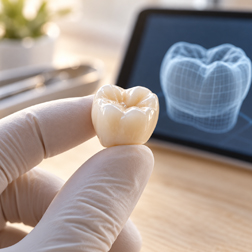
Advanced dental technology is not only useful for the provider. Digital images and 3D scans let patients see exactly what their dentist sees, making it easier to understand a diagnosis, follow the reasoning behind a recommended treatment, and feel informed throughout the process.
At Tredi Dental Group, that transparency is part of how we approach every patient relationship. Technology makes the conversation clearer and benefits everyone in the room.
Technology Works Alongside Clinical Expertise
Technology doesn’t replace the experience and judgment that make a skilled dental provider effective. It gives the dental team more and better information to work with.
Accurate diagnosis and sound treatment still depend on a thorough clinical examination, deep periodontal expertise, and a treatment plan built around the individual patient. The tools support the process but don’t replace it.
Modern dental technology has made care more informed, more precise, and more personalized than ever before. At Tredi Dental Group, these technologies are all part of how Dr. Tredinick and her team approach diagnosis and treatment. If you have concerns about your teeth, gums, or existing dental work, or if it has been a while since your last thorough evaluation, we are here to help.